
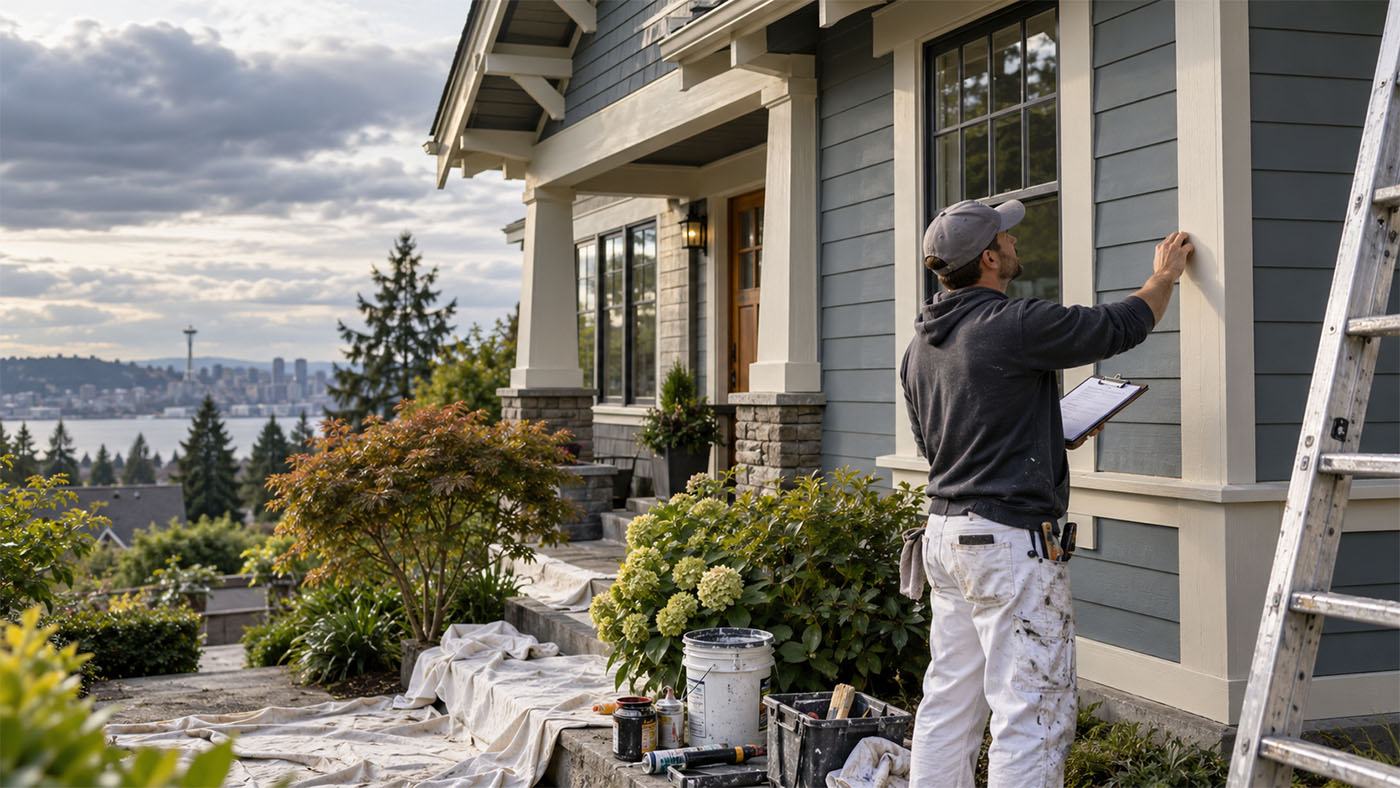
Late summer is one of the most important times for Seattle homeowners to look closely at their home’s exterior. Once fall rain returns, small paint problems can quickly become moisture problems. Peeling paint, cracked caulking, exposed wood, and worn trim are not just cosmetic issues. They can allow water to reach the surfaces underneath, leading to swelling, staining, mildew, wood rot, and more expensive repairs.
That is why an exterior painting checklist can be so helpful before the rainy season arrives. By inspecting your home now, you can decide whether it is time for touch-ups, repairs, or a full exterior repaint while the weather is still more favorable.
At Hate to Paint?, we help Seattle homeowners protect and refresh their homes with professional exterior painting, careful prep work, clear communication, and dependable results. If your exterior paint is showing signs of wear, late summer is the time to take action before the fall and winter moisture settles in.
Why Late Summer Matters for Exterior Painting in Seattle
Seattle’s exterior painting season is heavily influenced by weather. Paint needs a clean, dry, properly prepared surface in order to bond and cure correctly. Late summer often provides some of the best remaining weather windows before cooler temperatures, shorter days, and steady rain make exterior painting more difficult.
Waiting too long can create two problems. First, painting schedules often fill up before the end of the season. Second, failing paint may leave siding and trim exposed during the wettest months of the year.
If your home already has peeling, cracking, bubbling, or bare wood, another rainy season can make those issues worse. A late-summer inspection gives you time to address problems before moisture has a chance to spread.
1. Walk Around the Entire Home
Start with a full walkaround of your home. Look at every side of the house, not just the front. In Seattle, different sides of a home can age differently depending on shade, trees, sun exposure, wind, and moisture.
Pay close attention to:
- North-facing walls
- Shaded areas
- Siding near landscaping
- Trim around windows and doors
- Fascia boards
- Porch posts and railings
- Garage doors
- Areas near gutters and downspouts
Paint failure often starts in small sections. If you catch it early, the solution may be simpler than waiting until larger areas begin to peel or deteriorate.
2. Look for Peeling, Cracking, or Flaking Paint
Peeling paint is one of the clearest signs that your exterior needs attention before fall rain returns. When paint lifts away from the surface, water can reach the siding or trim underneath.
Cracking and flaking are also warning signs. These small openings may seem minor, but they give moisture a path behind the paint layer. Once water gets underneath, the surrounding paint may continue to loosen.
If you see widespread peeling, it may be time for a full repaint. If the damage is limited to a few areas, a professional painter can evaluate whether targeted repair and touch-up work is appropriate.
3. Check for Exposed Bare Wood
Bare wood should never be ignored before Seattle’s rainy season. When wood is exposed, it can absorb moisture. Over time, that moisture can contribute to swelling, cracking, staining, mildew, and rot.
Common areas where bare wood appears include:
- Window trim
- Door frames
- Fascia
- Corner boards
- Siding edges
- Deck railings
- Porch trim
Bare wood usually needs to be properly cleaned, sanded, primed, and painted. Simply brushing paint over the surface without proper prep may not provide lasting protection.
4. Inspect Caulking Around Windows, Doors, and Trim
Caulking plays a major role in protecting your home from moisture. It helps seal gaps around windows, doors, trim joints, siding seams, and other exterior transitions.
Before fall rain arrives, look for caulking that is:
- Cracked
- Missing
- Pulling away
- Brittle
- Shrinking
- Separating from the surface
Failed caulking can allow water to enter behind trim or siding. During a professional exterior painting project, damaged caulking should be removed and replaced where needed so the home is better sealed before paint is applied.
5. Look for Bubbling or Blistering Paint
Bubbles or blisters in exterior paint often mean moisture or heat has affected the bond between the paint and the surface. In some cases, bubbling can indicate that moisture is trapped beneath the paint.
This is especially important to check before the rainy season. If water is already getting behind the paint, fall and winter conditions may worsen the problem.
Blistering should be evaluated carefully. A professional painter can determine whether the issue is isolated or part of a larger moisture-related problem.
6. Watch for Mildew, Mold, or Dark Staining
Seattle’s damp climate can create ideal conditions for mildew and staining, especially on shaded sides of the home or areas near trees and landscaping. Dark streaks, greenish growth, or patchy discoloration may be signs that moisture is lingering on the surface.
Mildew does not always mean your paint has failed, but it should be addressed before painting. Painting over mildew or surface buildup can prevent new paint from bonding properly.
Professional prep often includes washing and cleaning exterior surfaces before scraping, caulking, priming, and painting.
7. Check Gutters and Downspouts
Gutters and downspouts can have a direct impact on your exterior paint. If water is overflowing, leaking, or draining against the siding, it can accelerate paint failure and moisture damage.
Before fall rain returns, make sure gutters are clear and downspouts are directing water away from the home. Look for staining, peeling paint, or soft trim near gutter lines. These areas may indicate water has been running over or sitting against the exterior.
Exterior painting helps protect the surface, but proper drainage is also important for long-term performance.
8. Inspect Trim, Fascia, and Siding for Soft Spots
Paint can hide early signs of wood damage. As you inspect your home, look for trim or siding that appears swollen, warped, darkened, cracked, or soft. These can be signs of moisture damage beneath the surface.
Problem areas often include window trim, fascia boards, corner boards, door frames, and lower siding sections close to soil or landscaping.
Damaged wood should be addressed before painting. Painting over soft or rotted wood may improve appearance temporarily, but it will not solve the underlying issue.
9. Evaluate Fading and Chalking
Faded paint can make a home look older and less maintained. Chalking is another sign of aging paint. If you rub your hand across the siding and notice a powdery residue, the paint may be breaking down.
Fading and chalking do not always create an immediate moisture concern, but they can signal that the paint is losing durability. If fading is combined with peeling, cracking, or bare spots, it may be time to schedule an exterior painting estimate.
10. Review High-Exposure Areas
Some parts of your home work harder than others. South- and west-facing walls may receive more sun exposure, while shaded or north-facing walls may stay damp longer. Areas under trees may collect debris, mildew, and moisture.
High-exposure areas to review include:
- Sunny siding sections
- Shaded walls
- Porch columns
- Window sills
- Deck railings
- Trim near rooflines
- Siding near landscaping
- Lower boards close to the ground
These areas may fail before the rest of the home and should be inspected closely before fall.
11. Decide Whether You Need Touch-Ups or a Full Repaint
Not every paint issue requires a full repaint, but it is important to know the difference. Small isolated areas may be candidates for repair, priming, and touch-up if the rest of the exterior is still in good condition.
However, a full exterior repaint may be the better choice if you notice:
- Widespread peeling
- Multiple areas of exposed wood
- Failing caulking throughout the home
- Significant fading or chalking
- Bubbling in several areas
- Moisture damage on trim or siding
- Paint that is nearing the end of its lifespan
A professional painter can inspect the exterior and recommend the right approach based on the condition of the home.
12. Schedule Before the Weather Window Closes
Late summer and early fall can be busy for exterior painting in Seattle because homeowners know the rainy season is coming. If your home needs painting, waiting too long may make scheduling more difficult.
Booking early gives you more flexibility and allows time for prep, repairs, color decisions, weather planning, and final walkthroughs. A rushed project is never ideal, especially when exterior surfaces need careful preparation.
Why Professional Prep Matters Before Fall Rain
A durable exterior paint job depends on proper prep. Paint needs a clean, dry, sound surface to perform well. If peeling paint, failed caulking, dirt, mildew, or bare wood are not properly addressed, the new paint may fail sooner.
Professional prep may include washing, scraping, sanding, caulking, priming, masking, protecting landscaping, and identifying areas that need repair. This work is especially important in Seattle, where moisture can expose shortcuts quickly.
At Hate to Paint?, we focus on preparation because it directly affects how your home looks and how well the paint protects your exterior surfaces.
Protect Your Home Before the Fall Rain Arrives
Exterior painting is not just about improving curb appeal. It is one of the ways homeowners can protect siding, trim, fascia, and other exterior surfaces from moisture damage.
Before fall rain returns, take time to inspect your home for peeling paint, cracked caulking, bare wood, mildew, soft trim, fading, bubbling, and drainage issues. If you notice warning signs, it may be time to schedule a professional exterior painting estimate.
Hate to Paint? provides residential and commercial painting services for Seattle homeowners and businesses with careful prep work, clear communication, and dependable results.
Contact Hate to Paint? today to schedule your exterior painting estimate before the rainy season arrives.